





















Setting Up a Subsidiary in Spain
Transport & Logistics
Setting up in Spain isn’t just opening a subsidiary and hoping it works.
It’s a market with its own transport regulations, its own geography of flows, and its own way of doing business, and mistakes made in the first months are costly, and come to light too late.
If you’re a company looking to enter the Spanish market, we bring something that can’t be improvised: over 30 years of experience running transport and logistics operations, with direct P&L, team and client responsibility.
Do you want to start with your current volume, or would you rather look for and acquire an existing company? Either way, we can help.
We’re not a generic international expansion consultancy. We’re the ones who sit beside you, who know the ground because we’ve walked it, and who step back once your operation runs on its own.
We hold the Transport Manager CPC qualification (Título de Capacitación) required to legally operate as a transport operator/carrier in Spain.
Shall we get into the details?
What sets us apart?

On-the-ground experience on both sides of the border
We don’t learn the Spanish market while working for you: we already know it. And we understand just as well how a European parent company thinks and decides.
The difference between a market-entry project that runs smoothly and one that stalls is almost never technical, it’s cultural: different decision-making rhythms, different negotiating styles, different ideas of what counts as “urgent”.
On top of that, Spain varies a great deal by region, and each one has its own character, culture and way of doing things.

Legal and regulatory side of transport
Transport Manager CPC qualification to operate as a carrier/logistics operator in Spain; good repute and financial standing are among the establishment requirements.
We don’t replace your tax or employment advisors, but we do help you avoid the most common mistake: setting up the commercial operation before the transport-regulatory side is sorted.
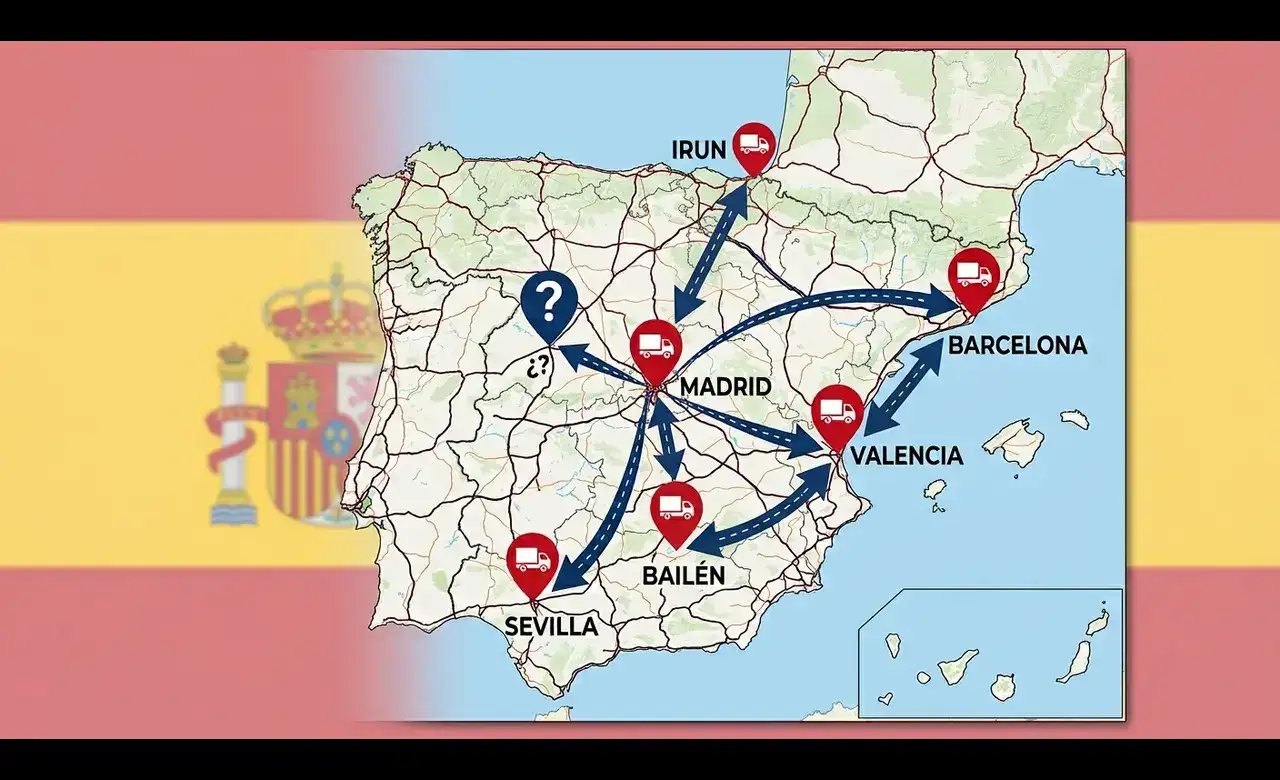
Geographic view by sector and traffic flows
Spain isn’t a uniform market. Where it makes sense to set up depends on your sector: serving automotive (northern corridors, Catalonia, the Basque Country) isn’t the same as serving fashion and retail (Madrid, Catalonia, with a strong last-mile component), or international flows with France (Mediterranean and inland corridors toward Irún/La Jonquera).
We analyse your actual flows (origin, destination, sector, seasonality, etc.) before recommending a location, partners or network model.

Staff selection
Hiring the first local manager is one of the most decisive, and riskiest, decisions in a market entry.
You need someone who understands your parent company’s codes while also knowing the Spanish landscape: its talent market, its way of managing teams, its pace.
A hiring mistake at this stage doesn’t show up in the interview, it shows up six months later, in delays and lost credibility with the client.
We define the profile, assess with an operational lens (not just the CV), and validate cultural fit before it becomes an expensive problem to fix.

Freelance model: flexible cost
We work as an independent interim manager, not as a consultancy with high fixed fees.
Cost adjusts to the phase and shapes your budget: light during prospecting, intensive during launch and start-up, then tapering off as your local team takes over. No forced retainers, no long contracts.
Our Method
Here’s our method as a whole

Feasibility diagnosis
Analysis of the Spanish market for your specific sector: demand, competition, pricing structure, and how well your value proposition actually fits.
No generic reports, with the figures and players that matter for your case.

Entry model design and property negotiation
Legal structure, transport-related legal requirements, and location based on your real flows, not the first industrial park you come across.
We negotiate the terms of setting up: market costs by region (Madrid, Barcelona, the Basque Country…), which fees and taxes are actually included in each offer, and what each municipality requires in terms of opening and operating licences. Every region has its fine print, and it’s expensive to find out after signing.
What do you need to know about opening licences?

Operational support for launch
Actual start-up of the operation (transport, warehouse, systems), with direct on-the-ground presence during the critical phase and an orderly handover to your local team once the operation is stable.
This includes defining supplier strategy: who the relevant players are for your type of distribution in Spain, based on cargo type, volume and shipment specifics. You don’t launch blind, and you don’t negotiate without knowing who’s who in the market.

Commercial aspect
Identifying and making first contact with potential clients, adapting the commercial proposal to local codes, and, where needed, support during early negotiations.
Where and how are you planning to set up?